



Common Journaling Mistakes That Keep You Stuck
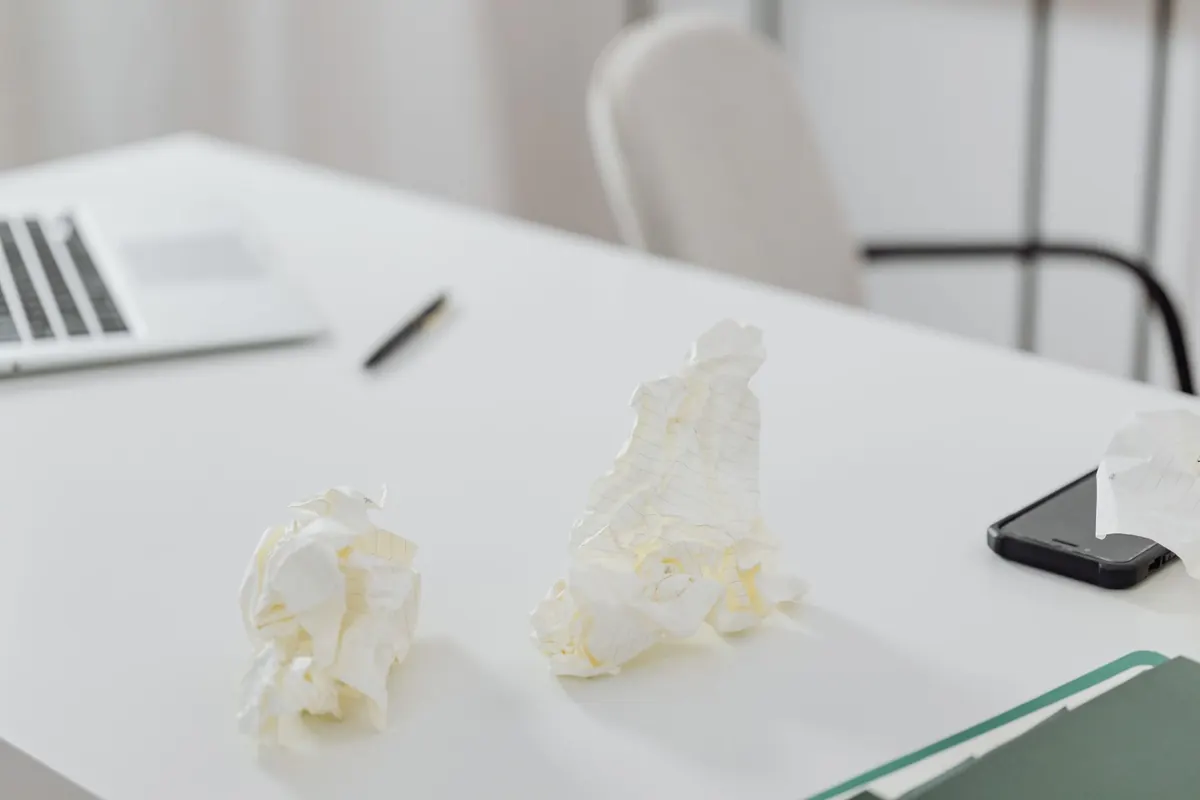
Most people who stop journaling don't run out of things to say. The notebook simply stops feeling useful and starts feeling like homework, and one day the gap between the last entry and today is wide enough that going back seems pointless.
What's left behind is rarely a discipline problem. It's a method problem — a handful of small habits that quietly turn a useful tool into a chore. They're easy to recognise once you know what you're looking at, and most of the fixes take about five minutes to put in place.
The Perfect Page Problem
There's a specific paralysis that appears around page one. You pick a good notebook, you pick a pen that feels right, and then nothing happens, because whatever you write will be the first thing in a nice object. So you draft the entry elsewhere first. Or you cross out words until the page looks like a censored document. Or you decide the notebook is spoiled and buy another one.
The wasted paper isn't the real cost. The real cost is that the writing turns into a performance review of your own mind. When every sentence is being graded, you stop writing the true, boring, half-formed sentences — and those are usually the ones carrying the useful information.
Try writing badly on purpose. Use the cheap notebook you were saving. Date the entry, keep going after a mistake, and let one line stand in for the paragraph you can't be bothered to build. A page you filled badly is worth more than a page you never touched. If you have been "saving" a hardback for the right moment, this is the moment.
All-or-Nothing Thinking
Streak logic is seductive and slightly destructive. You write every night for eleven days, miss four, and now the month feels wasted. So you skip the rest of it and start again in January.
Missing a day is information, not failure. It usually means you were tired, busy, or bored by what you were writing about — three things worth knowing. The more practical answer is to lower the floor of what counts. Keep three versions of the practice in your head:
- Minimum: one sentence before bed. "Long day, mostly admin, annoyed about the email."
- Standard: three lines — what happened, what you made of it, what's next.
- Extended: the full page or two, for when you actually have something to work through.
Decide in advance that the minimum version counts. It keeps the thread alive, and a thread is easier to pick up than a blank notebook. If a habit tracker makes you anxious rather than motivated, delete it. The point was never the grid.
Copying Someone Else's Journal
Social media turned journaling into a visual genre: coloured spreads, washi tape, elaborate mood trackers, thirty-day prompt challenges. None of that is wrong, but it's someone else's solution to someone else's problem. If your evenings are already tight, a format that takes forty minutes will last about a week.
Borrow structure, not content. A page split into "today / noticed / next" is structure. A list of prompts somebody else found meaningful is content, and content is the part you should be generating yourself. If a prompt bores you — and plenty will — skip it without guilt.
A quick test: try one format for seven days, then ask whether you looked forward to it or dreaded it. Keep the one you looked forward to, even if it's just four lines on an index card.
Writing for an Audience That Isn't There
Guarded entries are a common and quiet problem. You write as though a future reader might find the notebook — a partner, a child, a therapist, the internet — and the entry becomes a diplomatic summary instead of an honest one. Everything is phrased to make you look reasonable.
Set the privacy rule before you start, and then trust it. If the worry is real, write on loose sheets and keep them somewhere you've decided is private, or use a short-lived page you destroy afterwards. What matters is that you stop editing for an imaginary audience, because a journal that flatters you is a journal you can't learn from.
One useful habit: when you notice yourself softening a sentence, write the softened version and then add the blunt one underneath. You don't have to keep it. You only have to get it on paper once.
Logging Events Instead of Thinking
"Work was fine, went to the gym, made pasta, tired." It's accurate, and it's almost impossible to do anything with. Six months later it reads as a weather report of a life.
The events are the easy half. The material you're actually after sits one layer down: what you assumed, what you avoided, what you kept replaying on the walk home. Add one of these lines to the end of an ordinary entry:
- What I actually thought, rather than said.
- The moment that stayed with me, and why.
- What I avoided today.
- What I want tomorrow to look like.
Two columns work well too — facts on the left, interpretation on the right. It makes the difference visible, which is often all you need to stop treating a bad assumption as a fact.
Only Writing When It Falls Apart
Plenty of journals become an archive of bad weeks. That's understandable: crisis is what pushes people to the page. But then rereading the notebook feels like reading a case file against yourself, and you quietly stop opening it.
Balance the record. Not with forced gratitude lists, which tend to produce the same three entries forever, but with specifics. Instead of "grateful for family", write "the ten minutes on the back step with coffee while the house was still quiet". Instead of "good day", write what made it good and who was there. Specific, ordinary details age well and give you something to read back that isn't only damage.
A Short Reset for the Next Seven Days
If the practice has stalled, don't rebuild the whole system. Change five things and see what happens by Sunday.
- Write for four minutes with a timer, and stop when it goes off, even mid-sentence.
- Set your minimum to one sentence and count it as a full entry.
- Add one "what I actually thought" line to whatever you record.
- Keep one specific good thing per entry, no matter how small.
- Read back one entry from a month ago, looking for a pattern rather than a verdict.
Then check what changed. If the notebook feels lighter in your hand, you've found a format worth keeping. If it still feels like an obligation, drop a section or two — most journaling methods are suggestions, and the only real rule is that the page has to be somewhere you're willing to be honest.
A practice that survives a bad week is worth more than one that's perfect for a fortnight. Aim for that, and the entries will take care of themselves.