



Weekly Journal Review Checklist for Busy People
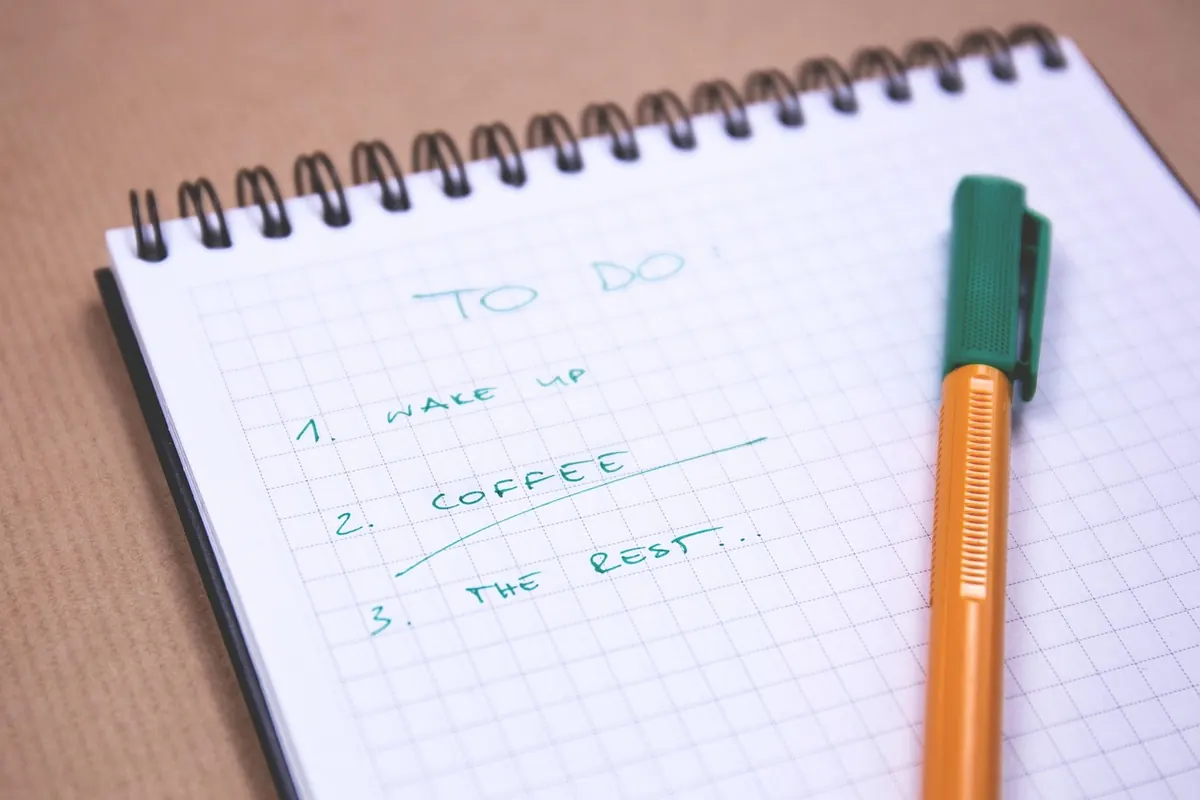
A weekly review has a reputation problem. It sounds like something that requires a fresh notebook, an hour of silence and a personality you don't quite have. So it gets pushed to Sunday night, then to next weekend, then quietly dropped.
The version below takes about twenty minutes and needs nothing more than the journal you already keep and a pen. It asks four questions: what worked, what taught you something, what is still hanging, and what comes next. Run it once a week — Friday afternoon before you shut the laptop, or Sunday morning with coffee — and the week that follows gets noticeably lighter.
Set the Container Before You Write a Word
The most common reason a weekly review fails is that it has no fixed slot. It competes with everything else, and everything else wins. So borrow a time that already has an ending attached: the last half hour of the working week, or the quiet stretch before the house wakes up.
Then set a timer for twenty minutes. The timer is not decoration. It stops the review from drifting into an hour of open-ended journaling that you will not repeat next week.
Open to a fresh spread and write four headings across the top: Wins, Lessons, Loose ends, Next moves. That is the entire infrastructure. Put the phone in another room, or at least face down and out of reach. Twenty minutes is generous if you stay on task, and nowhere near enough if you keep checking messages.
Write the date at the top of the page. In six months, when you are trying to remember when a decision started to feel wrong, a dated page will tell you more than any app.
Start With the Wins, and Be Specific
Spend the first five minutes listing what went right. This feels self-congratulatory and it isn't — it is data collection. Busy weeks erase their own evidence, and by Thursday most people can only remember what they failed to finish.
Count things like: a conversation you handled without losing your temper; a task that had been sitting for three weeks, finally done; a boundary you held; a favour you did for someone; a morning you got out the door on time. None of these belong on a résumé. All of them belong here.
Write the win as an action, not a mood
"Good week at work" tells you nothing and cannot be repeated. "Sent the draft Tuesday instead of Friday" reminds you that starting earlier worked — and that you know how to do it again. Aim for five to eight short lines. If you get stuck, ask: what went better than last week? What did I do that past-me would have appreciated?
Take Two Lessons, Not Ten
Two lessons. Not ten, not every small irritation that crossed your path. Two is enough to carry into a new week without turning the review into a backlog of self-improvement projects.
Ask two questions of the week: Where did I lose time or energy? and What would I do differently in the same situation? Then write the answer as an instruction rather than a verdict. "I should be better at email" is a verdict, and verdicts change nothing. "Answer the three emails that actually matter before opening the rest" is an instruction you can follow on Monday morning.
A review is not a report card. It is a short conversation with the person who has to live next week.
Not every week contains a lesson. Some weeks are just weather — a sick child, a brutal deadline, a system that broke on the worst possible day. The honest entry is "nothing to learn here, just get through it." Writing that down is far more useful than inventing a moral to satisfy the ritual.
Close the Loose Ends You Keep Re-Carrying
This is the step people skip and the one that pays best. Open loops — the email you haven't answered, the appointment you keep postponing, the friend you owe a call — take up attention even when you are not actively thinking about them. They sit at the edge of your mind and quietly charge rent.
List everything still hanging from the week. Then sort each line into one of three piles:
- Do it Monday. It is real, it is small, and it needs a day attached to it.
- Schedule it. It is real and bigger than two minutes, so it needs a time in the calendar, not a wish.
- Drop it. It has been on the list for a month and nothing has happened. Say so in writing and let it go.
Let some things die on purpose
A surprising amount of weekly friction comes from tasks that are neither done nor abandoned. Sending a two-line note — "I'm not going to get to this, sorry" — takes less energy than carrying it for another three weeks. Behave decently, then close the loop. If a loose end involves money, a contract or a health concern, write it down and get proper advice rather than trying to resolve it in the final four minutes of a review.
Choose Three Moves for the Week Ahead
You have five minutes left, and you have already done the thinking. Now choose three moves for the coming week. Three, because a list of ten is a list of none.
A useful shape: one thing that is overdue, one thing that moves something forward, one thing that is for you. In order, that might read: "book the eye test," "draft the proposal intro by Wednesday," "walk on Thursday evening without my phone."
Each move needs a day, not just a week. "This week" is a fog; "Tuesday morning" is a place. Write the day beside each line before the timer goes. Then close the notebook. The page stays where it is, and you go and live the week.
Your Twenty-Minute Checklist
- Minute 0–1: Same day, same time. Timer on, phone away.
- Minute 1–2: Date the page and add the four headings: wins, lessons, loose ends, next moves.
- Minute 2–7: List five to eight wins as specific actions.
- Minute 7–11: Write two lessons as instructions, not verdicts. Add one line about what you would keep exactly as it was.
- Minute 11–15: List the loose ends and sort them into do, schedule, or drop.
- Minute 15–19: Choose three moves and attach a day to each.
- Minute 19–20: Close the notebook. Done.
If you miss a week, skip it. Do not run a double review to catch up — that is how a twenty-minute habit becomes a two-hour one you avoid. If the full review feels heavy on a particular Friday, do only the wins and the three moves; that shortened version still beats an empty page. The point is not a perfect record of your life. It is arriving at Monday knowing what you finished, what you learned and what you are actually going to do next.
Photo: StockSnap / Pixabay